
When the numbers don’t form a system
In manufacturing, there is usually enough data. There are inventory balances, orders, invoices, and production jobs. But at some point, simple questions arise:
- Which products are we actually making money on?
- Why is actual cost higher than planned cost?
- Why isn’t profit growing when turnover increases?
- How much money is tied up in excess inventory?
And it turns out that there are many reports, but no complete picture.
A manufacturing ERP is not needed for tax reporting. It is needed for decision-making: what to produce, in what volumes, for whom, and with what profitability.
This article outlines the key reports that help you see the full picture of manufacturing operations and make sound decisions based on data rather than intuition.
Financial reports for decision-making
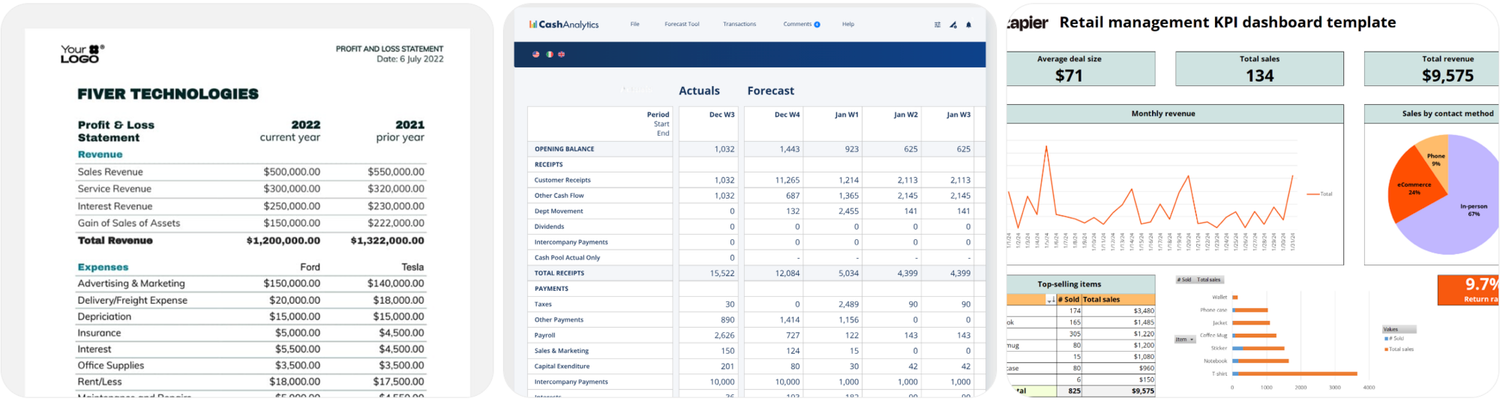
Manufacturing P&L
This is not about an accounting report for tax purposes, but about the profitability picture of manufacturing itself. Such a P&L should show revenue by product or product group, direct cost, production expenses, and gross margin.
The key is granularity. If a report exists only for the company as a whole, it offers little value. A manufacturing business needs to see results by orders, batches, and customers. That is when it becomes clear where the real profit is and where there is only turnover.
Such a report helps answer:
- which items should be scaled up;
- where pricing should be revised;
- which products should gradually be removed from the assortment.
Cash Flow
For Ukrainian manufacturers, it is critical to see not only profit, but also the movement of money. A business can be profitable on paper and still experience cash gaps.
The report should reflect planned customer receipts, supplier payments, tax liabilities, including VAT for LLCs, payroll, and other regular expenses. Not only historical data matters, but also a forecast for several periods ahead.
Without this, it is difficult to decide on launching new batches, purchasing raw materials, or expanding production.
Cost reports
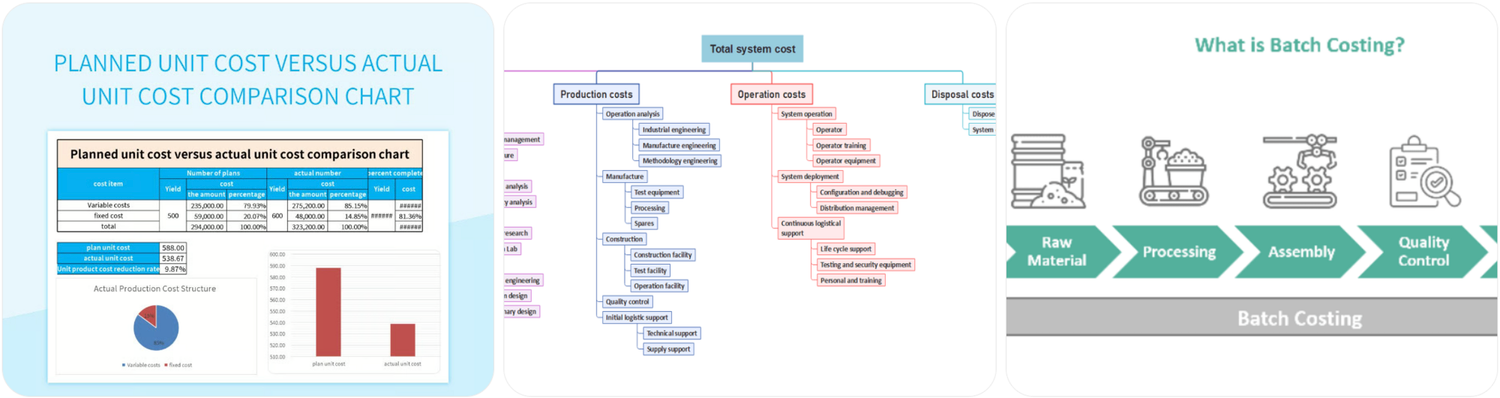
Planned and actual cost
In manufacturing, there is almost always a cost calculation. The problem arises when actual costs are not compared with planned ones.
An ERP should show the difference between standards and actual material write-offs, operation times, and labor costs. Even a small deviation in each batch can systematically reduce margin.
Such a report helps identify:
- where overruns occur;
- whether technological standards are being followed;
- whether the cost calculation is accurate.
Cost by batch
For businesses with batch-based production, it is important to calculate results not on average, but separately for each batch. Different orders may have different conditions: urgency, recipe changes, or different volumes.
Cost by batch shows the actual financial result of a specific production run. This is where it becomes clear whether small batches are profitable, whether urgent orders are justified, and how downtime or defects affect margin.
Warehouse reports
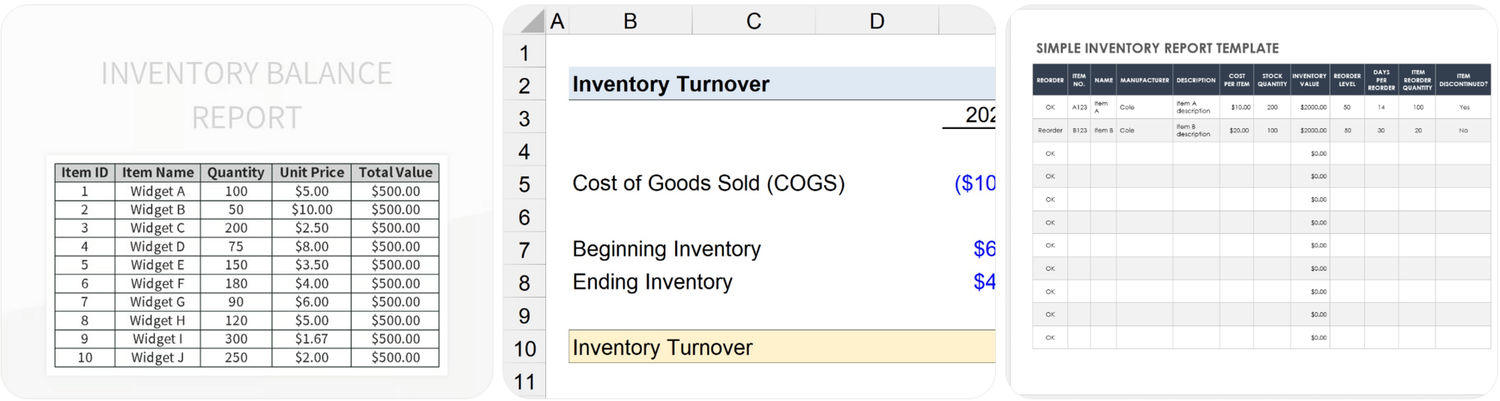
Inventory balances and turnover
It is not enough to see only the quantity in stock. You need to understand the structure of inventory: what is reserved for orders, what is free, and what is effectively sitting idle.
Turnover in days makes it possible to assess how long money remains tied up in inventory. If some materials do not move for months, this means working capital is frozen.
Such a report helps determine which items should not be reordered, what should be sold off, and where minimum stock levels should be revised.
Material movement
It is important to see not only the total, but also the history: who wrote off materials, when, for which order, and in what volume. Combined with standards, this helps control production discipline and identify systematic deviations.
Production reports
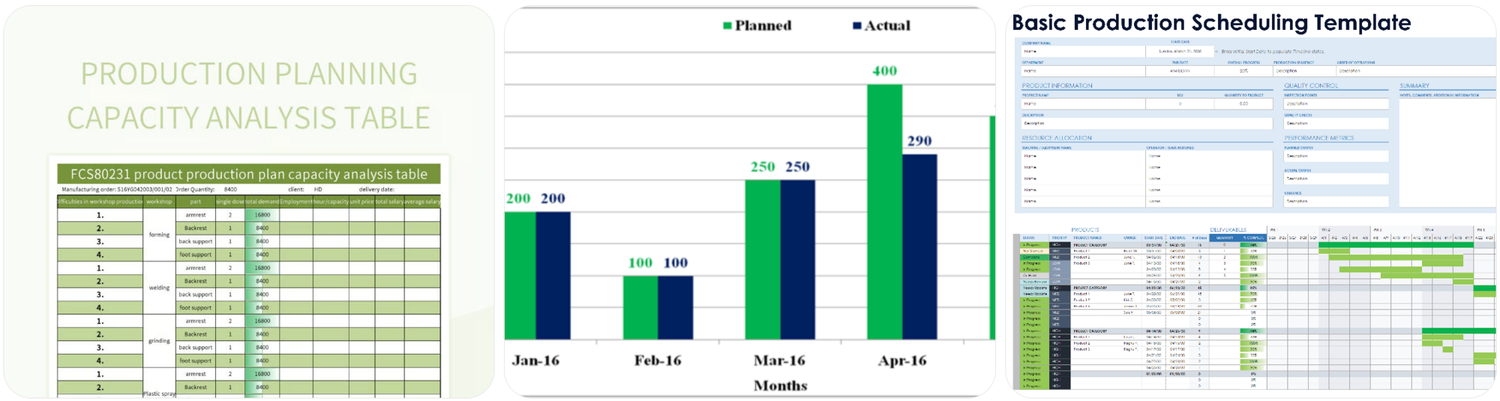
Capacity utilization
A capacity utilization report shows how efficiently equipment or production areas are being used. If some areas are overloaded while others are idle, this affects both lead times and cost.
Based on this, it becomes clear whether there is a real need for new equipment or whether the issue lies in planning.
Plan vs actual by order
Comparing planned and actual timelines makes it possible to assess order execution discipline. If delays become systematic, this signals a problem in processes, supply, or workload management.
Such a report makes it possible to analyze the reasons for delays rather than simply recording the fact of being late.
Order and customer reports
Profitability by customer
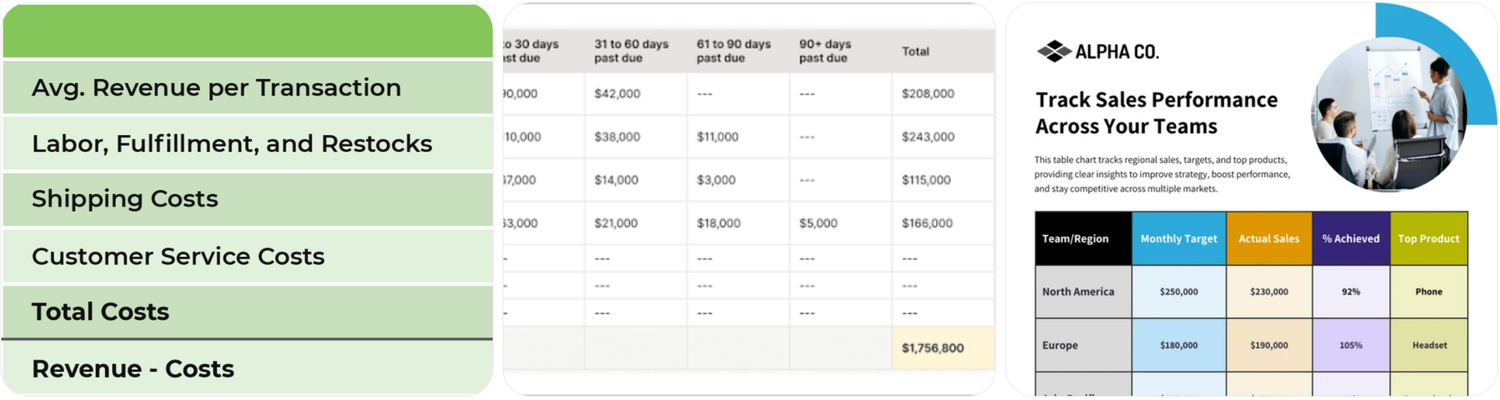
Not all customers generate the same financial result. A report should show revenue, actual margin, and related costs by customer. In manufacturing, this is especially important when different customers have different requirements for packaging, payment deferrals, or minimum batch sizes.
This makes it possible to revise cooperation terms, minimum volumes, or pricing.
Accounts receivable
An accounts receivable report should show not just the amount owed, but also the structure by overdue periods. For a manufacturer, this is a matter of liquidity: shipping without payment control quickly creates a shortage of working capital.
Defect report
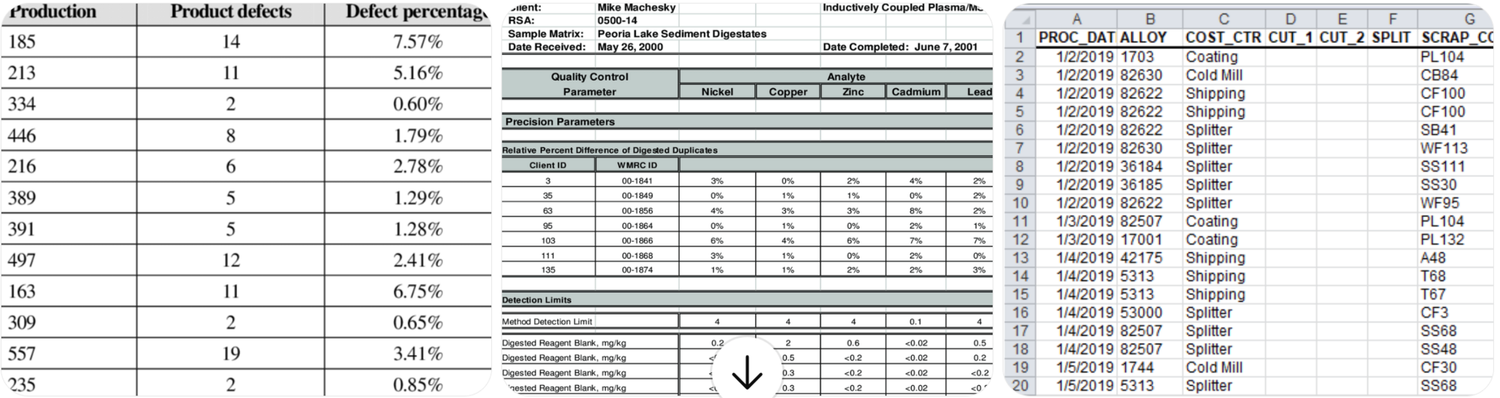
Defect analysis should reflect the percentage of total volume, as well as a breakdown by batches, shifts, or materials. If defects are systematic, this affects not only costs, but also order fulfillment timelines.
Profitability by business line
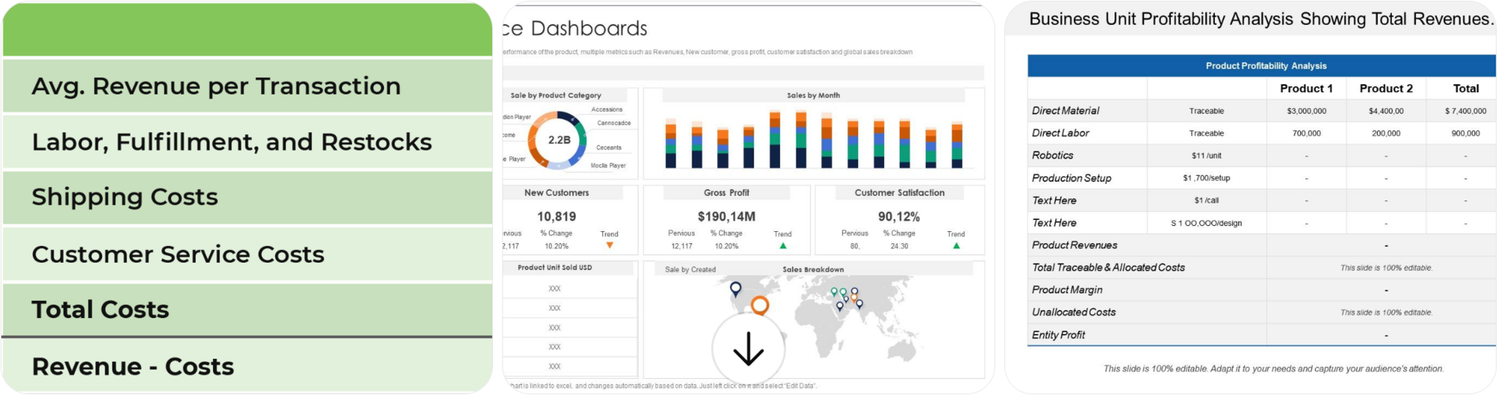
If a company operates with several product lines or different markets, it is important to see the result separately for each business line. Average figures across the company often conceal unprofitable segments.
Such a report makes it possible to define development priorities and allocate resources in a well-grounded way.
Common mistakes
Most often, problems arise not because of a lack of data, but because reporting is structured incorrectly.
The first mistake is focusing exclusively on tax data. The company sees revenue, expenses, and financial results for reporting purposes, but does not understand which products, batches, or customers actually generate profit. As a result, decisions are made based on the overall figure without understanding the underlying structure.
The second mistake is the lack of plan-versus-actual comparison. Cost calculations exist, but actual expenses are not compared with standards. Material overruns, extra labor hours, and downtime gradually reduce margin, but this is not reflected in the final figures.
The third mistake is the lack of batch-level detail. In batch manufacturing, different orders may have different profitability. If everything is calculated “on average,” unprofitable batches are offset by profitable ones, and the problem remains unnoticed.
The fourth mistake is having a warehouse without analytics. The company sees inventory balances, but does not see turnover, reserves, or slow-moving stock. As a result, money is tied up in inventory, but this is not perceived as a financial burden.
The fifth mistake is the lack of connection between manufacturing and finance. Production indicators exist separately, and financial indicators exist separately. When there is no single system, it is difficult to see how overruns at a production stage affect product profitability.
As a result, the company sees turnover, but does not understand where profit is generated and where losses occur.
Systematic ERP work built around manufacturing logic makes it possible to close these gaps. For example, when implementing Skynum, reports are generated with batch tracking, standards, actual write-offs, and real cash movement in mind. Manufacturing, warehouse, and financial data work together rather than separately.
This is not a matter of “more reports.” It is a matter of the right data structure and how the data is connected. When a system is configured for manufacturing processes, you can see not only the final result, but also the causes of deviations — and that is exactly what makes it possible to adjust processes in time.
A practical approach
ERP in manufacturing makes it possible to view the business in a detailed and systematic way: by batches, orders, customers, and business lines. Comparing planned indicators with actual ones helps quickly identify deviations and understand their causes.
When reports are built with the necessary level of detail, the company gets more than just accounting — it gets a complete picture of processes. This makes it possible to confidently manage profitability, inventory, and production workload, and to plan development based on real data.