ERP for manufacturing
A single ERP system where manufacturing, inventory and finance work as one managed process.
- BOM (Tech cards)
- MRP
- Batch accounting
- Real cost price
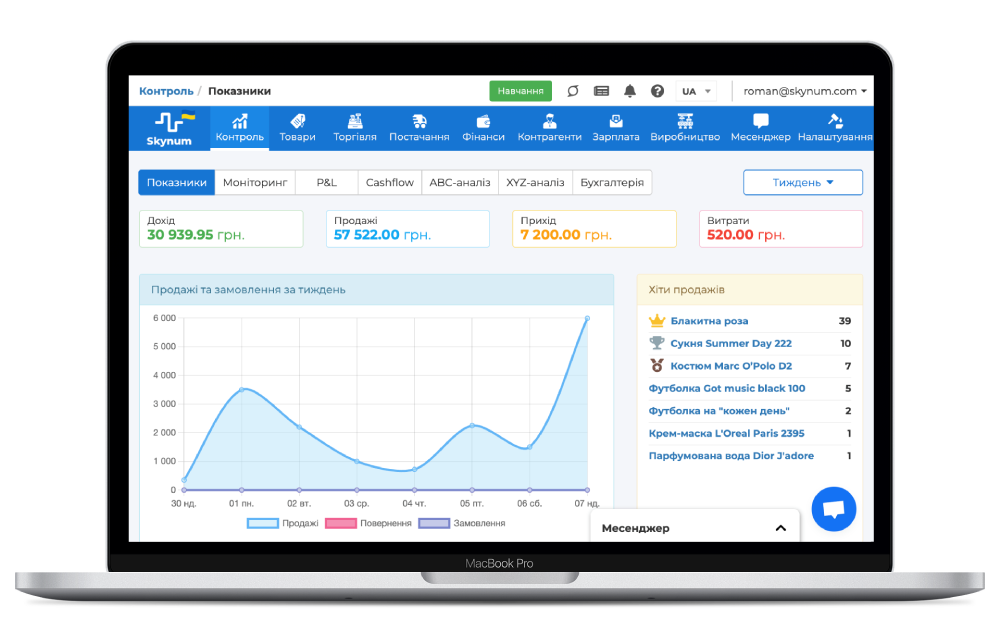
Full production cycle in one system
Purchasing, inventory, BOM, batch consumption, sales, expenses and finance — all in one process.
Actual cost calculation
Calculated automatically based on real batch consumption, payroll and production expenses.
Material and stock control
See what is in stock, what is reserved and what needs to be purchased for orders.
Product traceability
Full history from raw materials to finished goods — batches, serials and production orders.
Financial result
Know exactly how much you earn on each product — not just your revenue.
What manufacturing companies face
These are typical situations when production runs without a unified system.
Excel as the calculation center
Cost calculations live outside the system — formulas change, versions are not controlled, and errors go unnoticed.
Estimated cost only
Expenses are consolidated manually or “at the end of the month”, so the number is an assumption, not a real result.
Production runs on Word files
Operational sheets are created manually for each order — stages are not connected to standards and materials.
Material needs calculated manually
Without MRP there is no forecast — inventory swings between shortages and overload, production stops.
No single source of truth
CRM, inventory and accounting operate separately — managers see different numbers in each system.
Profit is unclear
Sales are visible, but actual margin per product remains unknown.
No batch control
It is impossible to track which raw materials and at what cost were used in a specific product.
Purchasing by intuition
Supply decisions are not linked to stock levels, reservations or safety stock — they are based on guesswork.
Expensive ERP customizations
Any change requires an integrator, time and budget — the system cannot keep up with the business.
Skynum connects manufacturing into one system
All processes — from purchasing to profit — work as one unified mechanism. You see margins and expenses instantly, not after the fact.
How manufacturing works in Skynum
From order to cost calculation and financial result.
BOM, stages, specifications and production orders.
MRP calculates material needs based on standards, stock and reservations.
Batch consumption (FIFO) with full traceability.
Actual cost and margin for each product.
Create production order
A plan or customer order launches production.
Material requirements planning (MRP)
The system determines what is in stock and what is missing.
Purchase materials
Purchase needs are generated based on stock and reservations.
Reserve for order
Materials are reserved for a specific production order.
Execute and consume
Materials are consumed by batches (FIFO) during execution.
Release finished goods
Finished goods are recorded with actual cost.
Sale and financial result
After the sale, the system immediately shows margin and profit.
- Each stage automatically affects inventory, reservations or finance
- Material needs are calculated based on standards, stock and orders
- Production expenses and payroll are integrated into cost
- Technological process with stages and operation sheets
- Production order statuses and execution control
- Traceability: which batches were used in each product
- Serial numbers for finished goods
- Expiration date control
CRM + Excel ≠ Manufacturing ERP
This is the difference between chaotic accounting and a transparent production system.
Comparison of manufacturing accounting approaches
Excel, CRM, 1C/BAS or Skynum ERP?
What is critical for manufacturing — and where it actually works.
| What matters | Excel | CRM | 1C / BAS | Skynum |
|---|---|---|---|---|
| Calculations (BOM) | Not linked to inventory | No | Complex configuration | Integrated into the process |
| Production process | Word files | No | Hard to configure | Linked to production |
| MRP / requirements | Manual formulas | No | Requires setup | Automatic |
| FIFO / batches | No | No | Possible, but difficult | Automatic FIFO |
| Production expenses | Manual consolidation | No | Complex methodology | Integrated into cost |
| Serial numbers | No movement history | No | Depends on configuration | Full traceability |
| Labels / barcodes | No | No | Via customizations | Print from order |
| Cost / margin | Manual calculation | No | Hard to maintain | Actual margin |
Skynum is manufacturing where data is entered once and works across all company processes.
Switch to Manufacturing ERPAnalytics that calculates real manufacturing profit
Cost, margin, expenses and cash flow — based on actual production data.
Manufacturing P&L
Financial resultFinancial performance based on actual cost, expenses, payroll and financial operations.
Material control
MRPWhat is required, what is in stock, what is reserved and what is in transit — full visibility of materials in one report.
Cash flow
MoneyCash movement across accounts and cash desks: inflows, outflows and actual balances. Full cash flow visibility for business management.
ABC/XYZ analysis
SalesWhich products generate the main share of revenue and how stable the demand is.
All tools to manage manufacturing
One system. One logic.
Manufacturing businesses Skynum is built for
ERP for small and mid-sized manufacturing companies in Ukraine
Apparel manufacturing
Clothing brands, sewing workshops, ateliers, and textile manufacturers with styles and sizes.
Cosmetics and chemicals
Cosmetics makers, nail products, creams, shampoos, and household chemicals manufacturers.
Food manufacturing
Sauces, canning, spices, beverages, confectionery and bakery products, dairy production.
Furniture manufacturing
Kitchens, wardrobes, case furniture — make-to-order and standard product lines.
Metalworking
Metal structures, assemblies, parts, and components — metalworking workshops.
Serial production
Electronics, drones, and components manufacturers with serial numbers and batches.
ERP for Ukrainian manufacturing
Operating since 2019. Helping companies manage inventory, production and finance in one unified system.
Ukrainian company
Fully developed and supported by a team based in Ukraine.
On the market since 2019
The system is continuously improved and evolves together with our clients.
Launch without integrators
ERP is configured for your business without complex implementations.
Your data is secure
EU-based servers, backups, access control and role-based permissions.
Knowledge base for manufacturing companies
A systematic approach to manufacturing accounting: from BOM and MRP to real cost and profit.

How Much Does ERP Implementation Cost in Manufacturing? Budget Breakdown and Timelines
Before choosing a manufacturing ERP system, it is important to understand the realistic budget and launch timeline for your type of business and the complexity of your processes.

Manufacturing Costs: What to Calculate, Where Mistakes Happen, and How to Get Things in Order
If you cannot see the exact margin on each batch, you are running production on rough estimates — and that is what gradually eats into your profit.
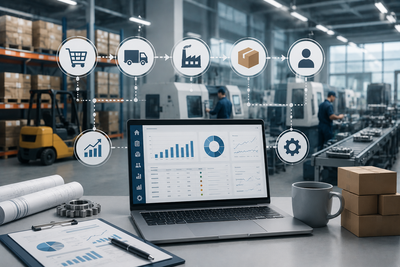
ERP for Small and Medium Manufacturing Businesses: Which Features Are Essential and Which Only Add Complexity
When a manufacturing company decides to automate its operations, choosing an ERP system becomes one of the most important and challenging decisions. The market offers dozens of solutions with hundreds of features, modules, and capabilities, making it tempting to select the most comprehensive system available in preparation for future growth.

Common ERP Implementation Mistakes in Manufacturing: Why It Was Bought but Never Took Of
Manufacturing companies implement ERP to gain control over product cost, inventory, and production workload. But even after the system is launched, the business does not always get the expected clarity in numbers and results.
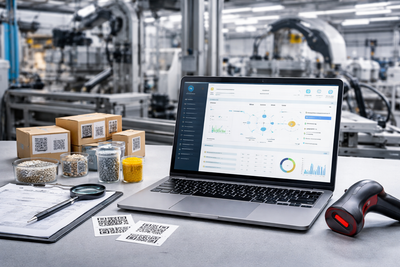
Traceability in Manufacturing: Why It Matters and How to Organize It
Traceability in manufacturing helps control the movement of raw materials, batches, and finished products, resolve quality issues faster, and build a more manageable production accounting process.
What reports should a manufacturing ERP include
A manufacturing ERP should show not only the final figures, but also the underlying structure. This article outlines the reports without which it is difficult to control the financial performance of a manufacturing company.
Bills of Materials and Process Sheets: How to Structure Them to Stop Losing Manufacturing Profit
Unnoticed differences between planned and actual costs gradually erode margins, even when production keeps shipping steadily.

How to Choose an ERP for a Manufacturing Company in Ukraine
Choosing an ERP for a manufacturing company is a decision that determines how you will control cost of goods, inventory, and financial performance. This article provides a practical approach to selecting a system for a manufacturer in Ukraine: which criteria to consider, which functions are critical, and how to avoid mistakes when testing an ERP.
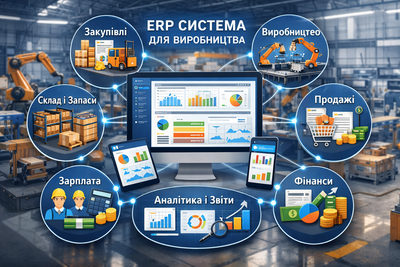
What Is an ERP System for Manufacturing and How It Differs from Warehouse and Accounting Software
An Overview of the Differences Between Enterprise Resource Planning Systems and Other Supporting Software Used by Manufacturing Companies
Questions about ERP for Manufacturing
Short answers to the most common questions manufacturing companies ask before implementing an ERP system.
Unify your manufacturing in one ERP system
Bills of materials, batch tracking, production expenses and real cost —
in one system without Excel and disconnected tools.
No servers. No complex implementation.
Inventory, production, finance and analytics — in one unified system.