UniTalk is an IP telephony service for business. The UniTalk integration in Skynum connects calls with your customer base: during an incoming call the manager sees the customer card, every conversation is stored in the log with a recording, and missed calls automatically become callback tasks.
This article is about connecting UniTalk. To learn what telephony can do once connected — the call card, log, analytics and tasks — read the separate overview: telephony in Skynum.
UniTalk Integration Features
Once set up, Skynum receives every call event from UniTalk and uses it in your work:
- Incoming call card with customer data before you pick up the handset.
- Log of all calls with recordings and the operator.
- Automatic callback tasks for missed calls.
- One-click calling from the counterparty card, log or task.
- Smart routing: a regular customer's call goes to their responsible manager first.
- Call analytics and conversion of conversations into orders.
- Call history on the Communications tab of the counterparty card.
The setup has three parts: get an API key in UniTalk, create the integration and match employees in Skynum, then configure webhooks in the UniTalk account.
Skynum users get special terms at UniTalk: an extra month of use free of charge on top of the standard plan. To claim the bonus, sign up via our referral link or write to Skynum support — we will confirm to UniTalk that you are connecting through us.
What to Prepare in UniTalk
- An active UniTalk account with a connected number.
- Employees' internal lines (SIP) that already receive calls.
- Access to the API and Automation section.
- Access to the Incoming Scenarios section, if you plan to use smart routing.
How to get the API token:
- Log in to your UniTalk account.
- Open API and Automation → API.
- In the API Key block, create a key if there is none yet.
- Copy the key. In Skynum it goes into the Token field.
The connection requires the API Key specifically — not the value from the Incoming Webhooks block. Do not share the key in correspondence or screenshots: it grants programmatic access to your telephony.
How to Connect UniTalk in Skynum
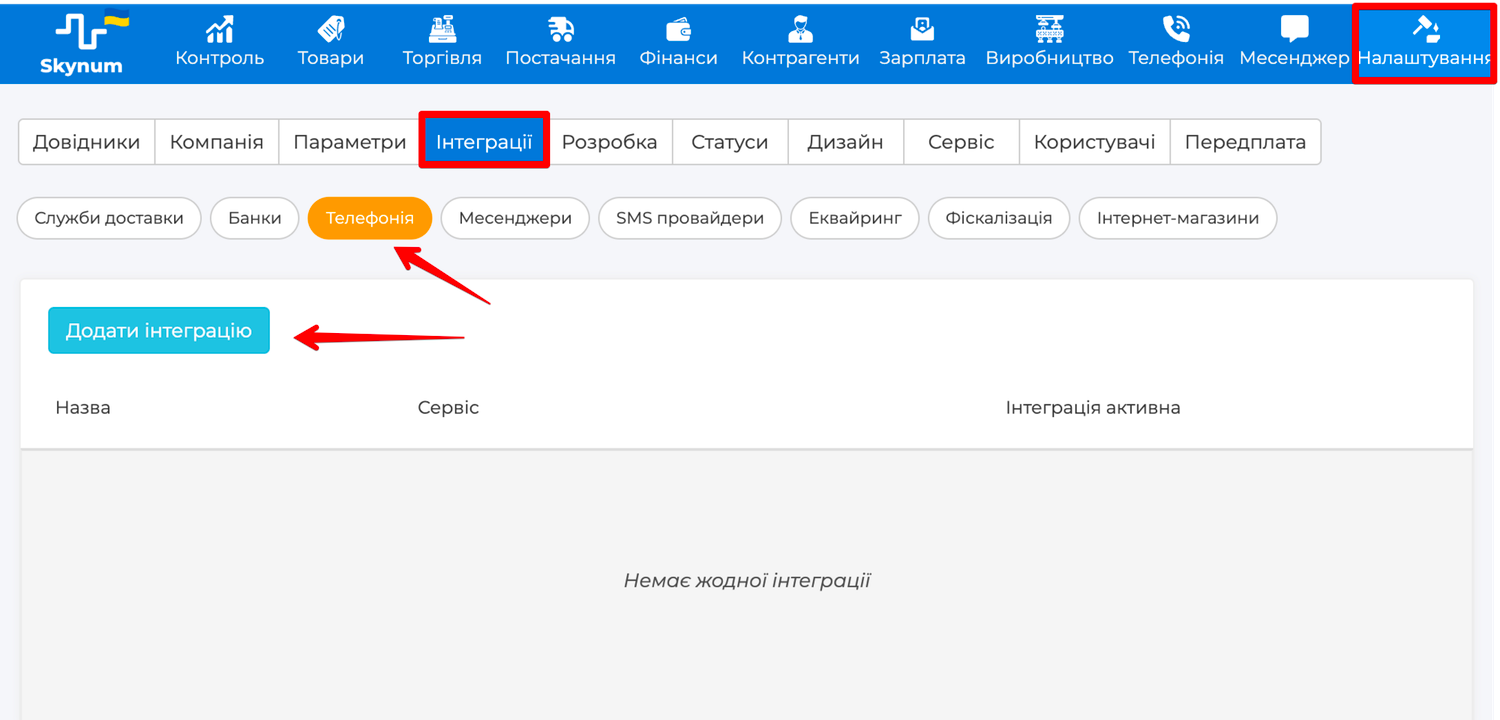
Open Settings → Integrations and go to the Telephony category. Then click Add integration and select UniTalk.
The integration settings page will open; fill in the following fields:
- Integration name — the internal name in Skynum. Name it so it is clear which UniTalk number or account this is.
- Integration active — enables receiving calls through this integration.
- Default — check it if you have several telephony integrations: one-click outgoing calls go through the default integration.
- Automatic task for missed call — enabled from the start: for every missed incoming call Skynum creates a callback task. Turn it off if you do not need this scenario.
- Branch, legal entity — fill it in if the number serves a specific branch; an empty field means the company's shared telephony.
- Token — the API key from your UniTalk account.
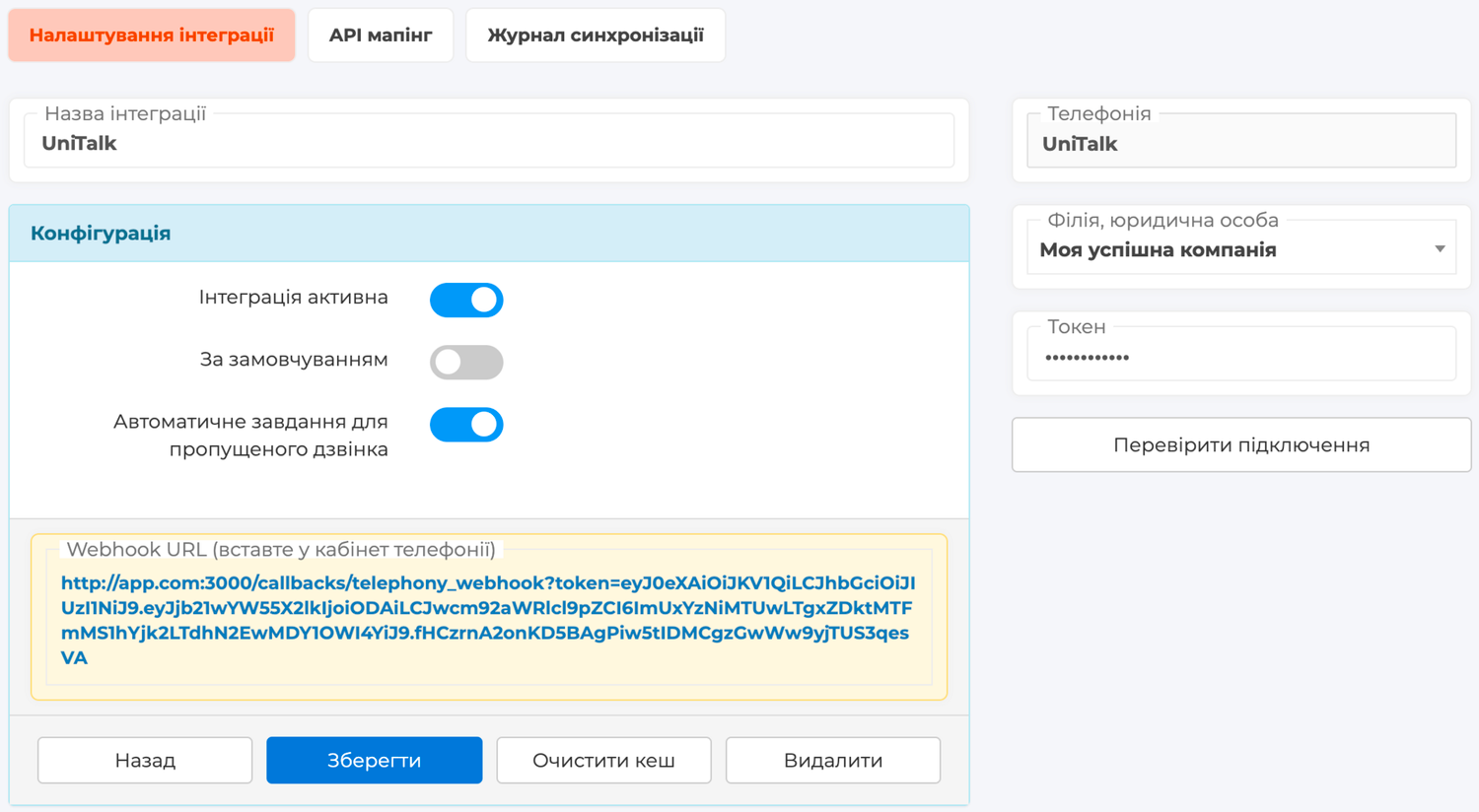
After saving, the Webhook URL (paste into your telephony account) field appears at the bottom of the page. Copy this address in full.
One address for everything: the same Webhook URL is used both for call event webhooks and for the smart routing step in UniTalk.
API Mapping: Skynum Users and UniTalk Lines
For Skynum to know which employee answered or made a call, match users with their lines:
- Open the API mapping tab in the integration.
- In the Telephony employees section, select each user's internal UniTalk lines. If the list is empty, click Load from UniTalk.
- Save the mapping.
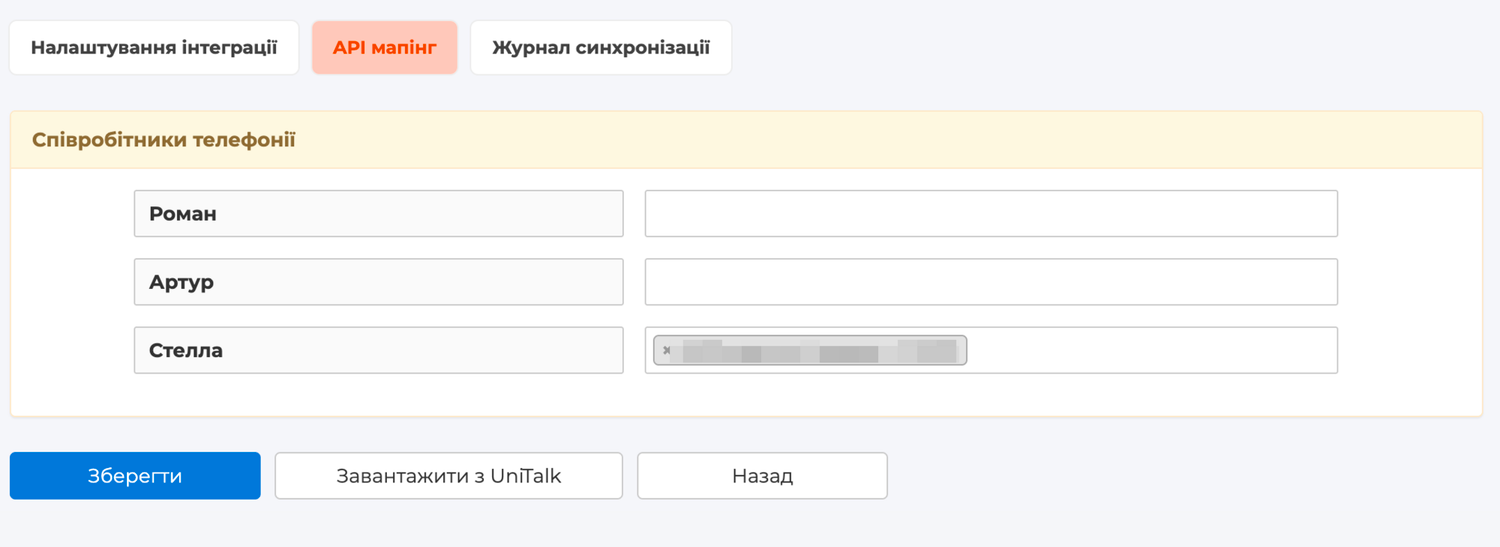
One employee can have several lines selected. For outgoing calls, the employee's first line from the UniTalk directory is used.
Call Event Webhooks in UniTalk
Webhooks tell Skynum about the start, redirection, answer and end of a call — thanks to them the call card and log work in real time.
First, create one handler for Skynum:
- In your UniTalk account, open API and Automation → Event Handlers.
- Click Add and give it a clear name, for example Skynum.
- Select the send webhook action.
- For Execute, select Immediately.
- In the URL field, paste the Webhook URL copied from Skynum.
- For HTTP method, select POST; for Request body — Standard JSON.
- Save the handler without delays or additional conditions.
Then in API and Automation → API, in the Call Event Handling block, assign this handler to four events: New call, Call redirected, Call answered and Call ended.
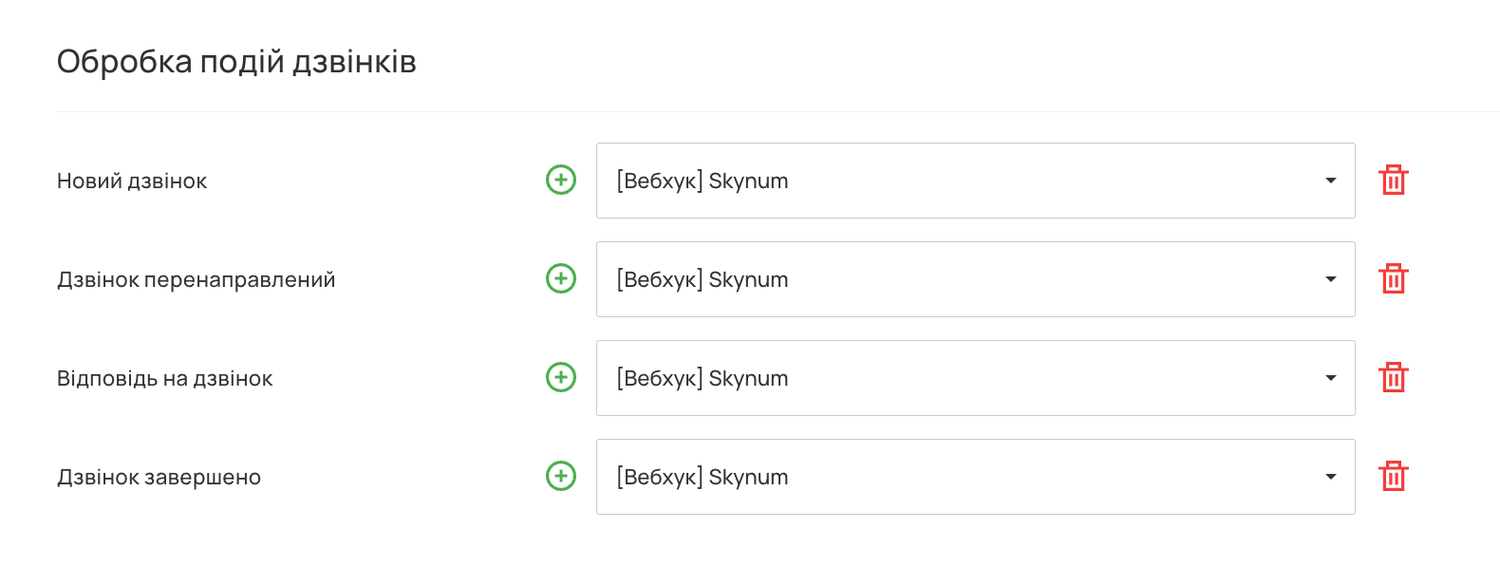
The Check button in UniTalk sends a service test event — Skynum responds with success, and it does not appear in the call log. Verify the integration with a real call.
Smart Routing in UniTalk
Smart routing directs a known customer's call to their responsible manager first. If you do not need routing, you can skip this section — everything else works without it.
- In your UniTalk account, open Calls → Settings → Incoming Scenarios.
- Open the active scenario that serves the numbers you need.
- Add the To responsible manager action.
- In the Find responsible field, select Request to your API.
- In the Enter URL field, paste the same Webhook URL from Skynum.
- Set the waiting time and ringing tone.
- Click Save scenario.
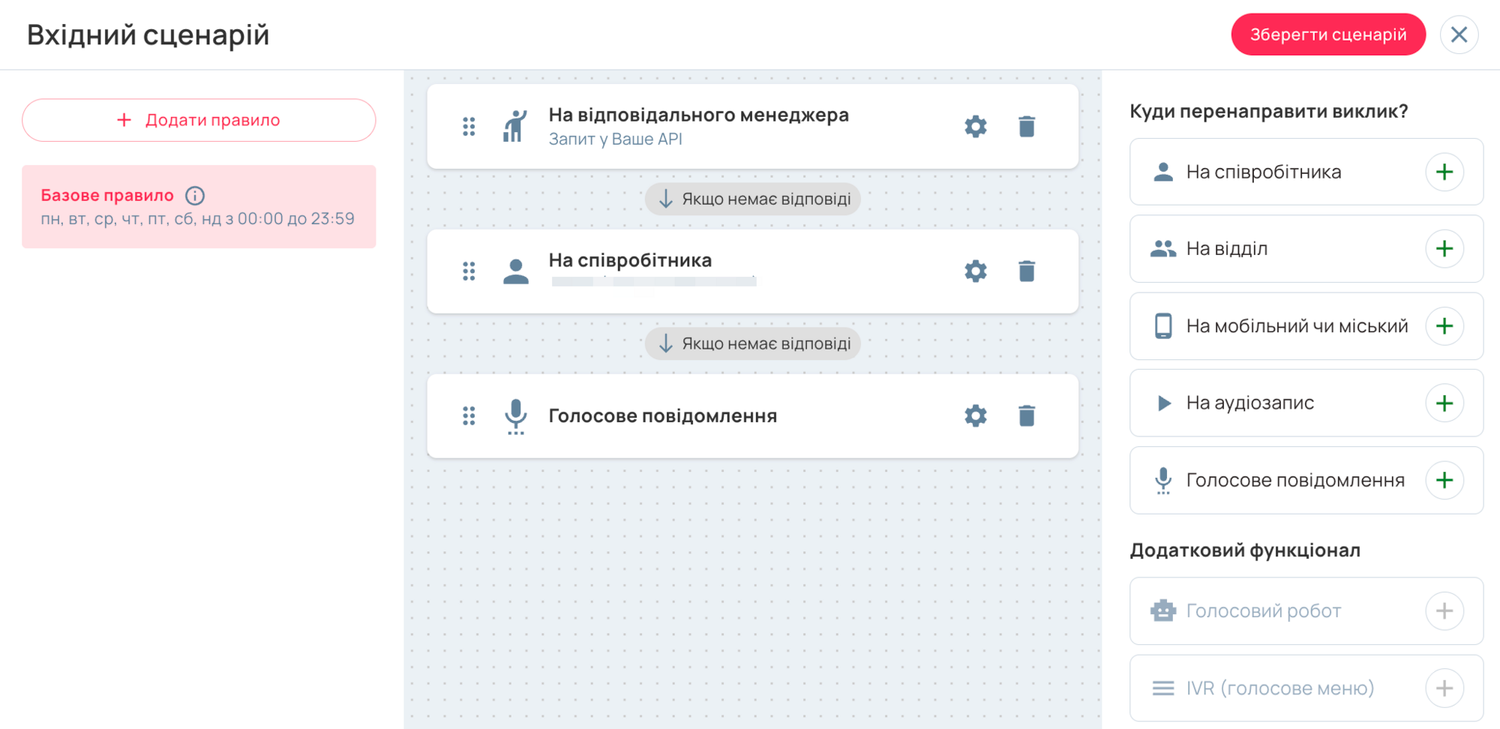
Important: after the "To responsible manager" action, be sure to keep the regular scenario steps — To employee, To department or another active route. They are what handle a call from an unknown number, a customer without a responsible manager, or when the manager did not answer.
UniTalk checks the manager's availability itself: if the responsible manager is on a call, the action is skipped and the call proceeds through the scenario. A nice bonus: if the customer's number is in Skynum, the customer's name from your database appears on the manager's SIP app screen during an incoming call.
Working with Calls
When a customer calls, a call card appears in the corner of the Skynum screen: customer name, contact person, debt, open orders. The manager greets the customer by name before the first sentence, and an unknown number turns into a new counterparty or is linked to an existing one right from the card.
Every conversation is stored in the Telephony log with the operator and an audio recording. From the call card the manager adds a note about the agreement, creates a task or places an order right away — it keeps its link to the call, so analytics shows an honest conversion of conversations into sales.
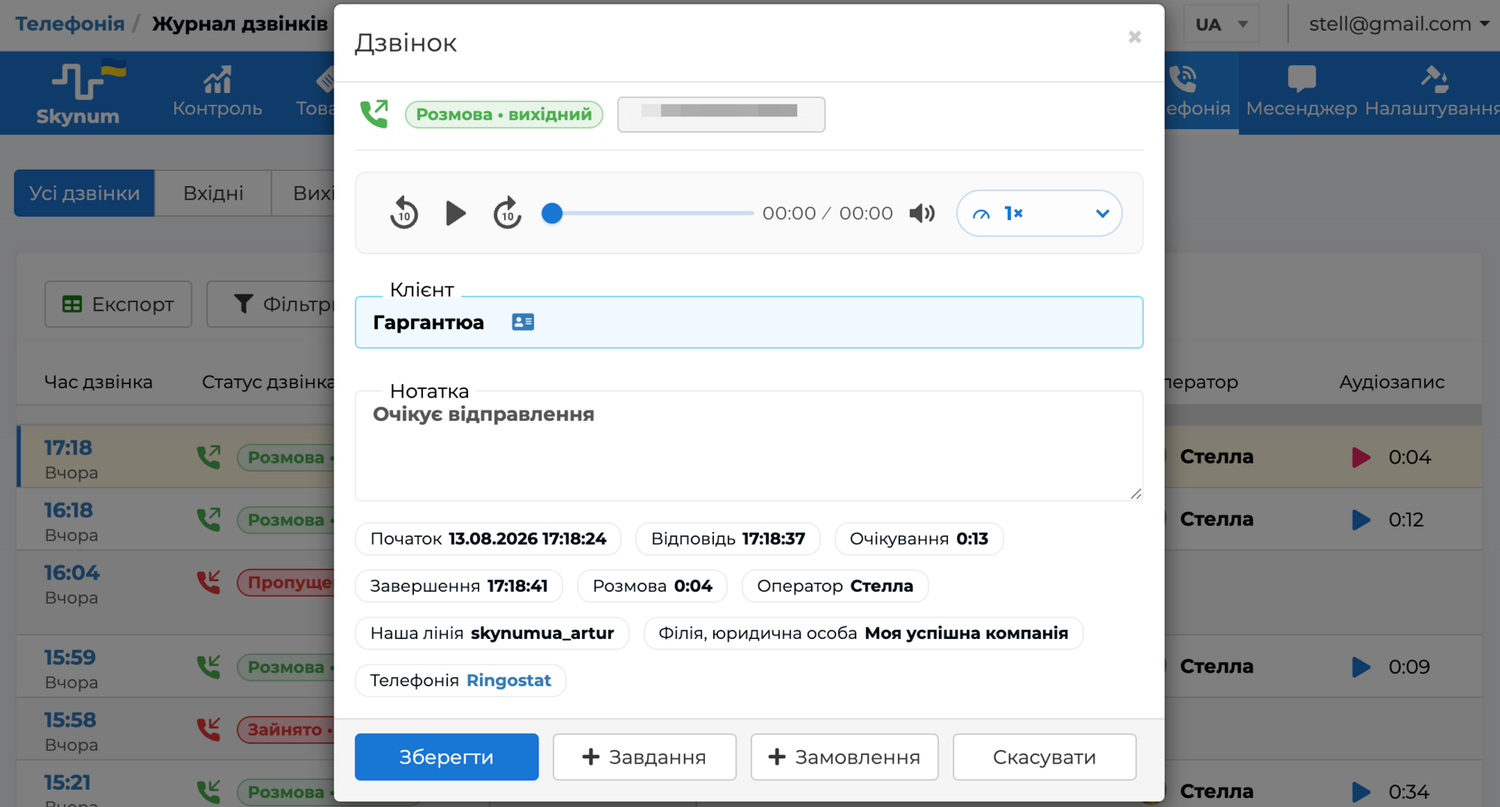
A missed incoming call automatically becomes a callback task — for the responsible manager or in the shared queue of unassigned tasks. Repeated calls from the customer are attached to the same task, and it closes automatically as soon as the conversation takes place.
One-click calling needs no separate settings in the UniTalk account. Once employees are matched in API mapping, the manager clicks a number in the counterparty card, log or task and chooses Call: first their line rings, and after picking up the handset UniTalk dials the customer.
More about the call card, log, missed call tasks and analytics — in the overview telephony in Skynum.
Checking After Connection
- Call the company number from a mobile phone.
- Check that an incoming call card appeared in Skynum, and after the call ended — an entry in the Telephony → Call log with the operator and audio recording.
- Do not pick up the test call — make sure a callback task was created.
- Open a counterparty card, click the number and choose Call — check the outgoing call.
- If smart routing is configured, separately test a call from a customer with a responsible manager and from an unknown number.
To connect UniTalk you need an API key, matched employee lines and one webhook handler for four call events. Smart routing is enabled with a separate action in the incoming scenario — always with fallback steps after it. The step-by-step guide with all fields is in the Skynum documentation.